All posts by Brent Baxter

Wordplay Thursday #130

Wordplay Thursday

Welcome to Wordplay Thursday!

Here’s a writing prompt for you. It’s a simple fill-in-the-blank. You can use one word or several. Feel free to get as crazy, genre-appropriate, or as imaginative as you want. The point is to get the creative juices flowing. And it’s a good thing to dig deeper, so don’t stop at the first idea that hits you. Try coming up with at least five things.

“Honesty is _____.”

I’ll give you an example to get you started:

“Honesty is giving back that extra penny the cashier gave you by mistake.”

Wordplay Thursday

I’d love to hear what you come up with, so please share in the comments. Oh, and please keep your posts below an R-rating. It’s a family show, after all!

And thanks to Ken Matthiesen, Jerry Childers, Kim Kondrashoff, Anonymous, Tomas Giraitis, Matt Martoccio, and everyone else for your great additions to Wordplay Thursday #129 (read it here)! Great job!

Wordplay Thursday is a great way to the get the creative juices flowing and get some songs started. But what about finishing songs? Sometimes that can be more difficult. That’s why I’ve written “Finish Your Song! 20 Ways To Overcome Creative Roadblocks.” Click here to find out how to finish more songs faster and better. Or click on the image below. Thanks!

God Bless,

Brent

finish cover 3D

The Dangers of Cowriting

Man vs Row


Recently, I wrote about the advantages of cowriting <READ IT HERE>. I’m a big fan of cowriting. As a lyricist, I need a great melody writer to have a prayer of getting my songs cut. However, there are a few potential downsides to cowriting. I want to point these out so you can be aware of them- and avoid them!

1. Getting lazy.

The great thing about cowriting is that you can lean on your cowriter to bring in great ideas and hooks, help you overcome creative roadblocks, and catch mistakes in your songs. The downside is that you might use your cowriter as an excuse to get lazy. “I don’t need to prep- Joe always has good ideas…” “I’ve worked on this 2nd verse for a whole 5 minutes… I’ll just take it in to Kelly…” You always want to strive to become a better songwriter.

Don’t use your cowriter’s strength as an excuse to become a weaker songwriter.

2. Getting too social.

One of the great things about cowriting is that you get to spend a few hours with people you enjoy.  A danger of cowriting is that you get to spend a few hours with people you enjoy.  It’s easy to let the “how ya been” turn into “where’d the last 3 hours go” as you chit-chat your whole writing session away.  It’s good to open up and share your life with a close cowriter (it can lead to great, honest songs), but you shouldn’t use to avoid getting down to work.  It’s easy to change the subject away from your song when you hit a creative roadblock.  And it’s fine to step away for a minute or two.  But you have to get back to work.

Don’t use too much visiting as a way to hide from the work.

3. Mis-writing ideas.

Sadly, it’s inevitable that you’ll lose a good idea or two (or more) to a bad or mismatched cowrite. It happens to all of us. Maybe you took your country-rap idea to a hillbilly cowriter, and it just didn’t turn out like you hoped. But you don’t want to risk insulting your cowriter over it, so you just put it away and hope they don’t want to spend money on a demo. Or maybe it’s a “first date” or “blind date” cowrite, and you throw out your best idea to someone who is both underskilled and overconfident. Next thing you know, your idea is hijacked and totally messed up. It’s not the end of the world, though it can sometimes feel that way.  You’ll survive- you’ll have more ideas and more songs.  But it is frustrating.

Sometimes the price of cowriting is wasting a great idea.

4. Writing vanilla by committee.

Cowriting can be great for polishing a song till it shines. And sometimes a cowriter can encourage you to take risks that you normally wouldn’t. But sometimes a cowrite can end up knocking off all the rough edges that made your idea cool in the first place. Sometimes “songwriting by committee” can leave you with a very middle-of-the-road, safe, vanilla, blah song. You might end up with a song that’s well-crafted, but heartless.

Two-heads-instead-of-one can sometimes leave your song without a heart.

In spite of these dangers, I believe cowriting can be hugely beneficial. (Read “The Advantages Of Cowriting” here.) I know cowriting’s been a big blessing for me. But knowing these dangers can help you avoid or deal with them. And knowing is half the battle. (Extra points if you can name that reference.)

What about you? Any other cowriting dangers that we should add to this list?  Or cowriting horror stories?  Leave them in the comments!

Pro songwriters know they have to face and overcome disappointments like frustrating cowrites now and then.  And if YOU want to become a pro, you need to think like a pro, too. In my FREE e-book, “THINK LIKE A PRO SONGWRITER,” I not only reveal several of the mindsets which separate the pro songwriter from the amateur, but also…

  1. How to get on a music publisher’s radar
  2. How the pros know who is looking for songs
  3. Six simple ways to make your songs more commercial
  4. And more!

To get your FREE, INSTANT download of “THINK LIKE A PRO SONGWRITER,” just click on the image below, or CLICK HERE!

think like a pro songwriter 3D

God Bless and Enjoy the Journey,

Brent

Brent Baxter is a hit songwriter with cuts by Alan Jackson, Randy Travis, Lady Antebellum, Joe Nichols, Gord Bamford, Ruthie Collins, Ray Stevens, and more. He’s written a top 5 hit in the US and a #1 in Canada… so far.

Man vs Row

Wordplay Thursday #129

Wordplay Thursday

Welcome to Wordplay Thursday!

Today, I’m going to give you a topic, and the wordplay is to show that topic with ONLY sensory images (sight, smell, taste, touch, sound). The point is to have fun with the old Nashville advice that says, “Show me, don’t tell me.” You can just pick one sense, or you can challenge yourself by playing one image from each of the 5 senses.

Last week, we dove into the topic of “High School” (and ya’ll did great- read it here).  This week, let’s challenge ourselves by writing about an even smaller part of that topic.  Let’s dive deeper.  This week, let’s stay in high school paint a picture about your…

“Locker”

Here’s an example to get you started:

“My locker is blue, just like every other one in this hallway. The girl next to me has a magnetized mirror inside her door, and she’s fooling around with her hair. My black football cleats stink of sweat and the practice field and leave grass clots on my Algebra 1 book.”

Now it’s your turn. Show me, don’t tell me!

Oh, and please keep your posts below an R-rating. It’s a family show, after all…

And thanks to Matt Martoccio, Ken Matthiessen, Debbie Convoy, Barney Coulter, Jerry Childers, Tomas Giraitis, Nick S., Kim Kondrashoff, and everyone else (here and on Twitter and Facebook) for your great additions to Wordplay Thursday #128 (read it here)! Great job!

Since strong imagery is such an important part of professional-level songwriting, I’ve put together a course on imagery. It’s called, “Use Imagery To Supercharge Your Songwriting (Like The Pros Do)” and it’s available now. And this week, you can get my new course at a discounted price!

The live ONLINE workshops for “Use Imagery To Supercharge Your Songwriting (Like The Pros Do)” are now available for only $60.

That’s 33% off!

This is for a limited time, so don’t delay. The workshops are on February 16 and 18, and a ticket comes with ALL the materials for the full course:

*2 hours of video teaching

*1 hour of audio (great for listening on-the-go)

*50-page ebook

*course workbook

And, of course, you get an hour of additional coaching on the live, online workshop. As long as you have an internet connection, you can join us! (We’ll be using the Fuze online platform, which is free.)

By the end of the course, you’ll have the basic skills to:

  1. Effectively use both literal and figurative imagery.
  2. Make your story come to life using imagery.
  3. Prove your character’s personality using imagery.
  4. Make your listener connect to your character’s emotions using imagery.
  5. Hook your listener in the song’s first few lines using imagery.
  6. And to begin more songs (more easily) using imagery exercises as the start of your songwriting process.

To find out more, just…

CLICK HERE FOR THE FEB. 16 ONLINE WORKSHOP AND COURSE.

CLICK HERE FOR THE FEB. 18 ONLINE WORKSHOP AND COURSE.

If you can’t make either workshop, but you’re ready to “Use Imagery To Supercharge Your Songwriting (Like The Pros Do)” CLICK HERE or on the image below.

God Bless,

Brent

Brent Baxter is a hit songwriter with cuts by Alan Jackson, Randy Travis, Lady Antebellum, Joe Nichols, Gord Bamford, Ruthie Collins, Ray Stevens, and more. He’s written a top 5 hit in the US and a #1 in Canada… so far.

imagery_square_copy

 Wordplay Thursday

Use Small Details To Make Your Song More Believable

Man vs Row

There is power in finding images that go deeper than the obvious or cliche images.

I had a publisher tell me once, “write about the truck from the INSIDE THE CAB, not from the OUTSIDE.”

“The truck,” of course, is a metaphor for the situation of the song- the song’s emotion and story.  (Funny how I’ve always remembered that metaphor- it’s probably because it’s wrapped in an image.  Hmmm…)

Too many writers (and I was obviously guilty of this) write about “the truck”- the situation in the song- from the outside. They describe it using imagery and details that anyone who isn’t IN that situation could use. It’s the obvious ones. And, usually, it’s the cliche ones.

Our job is to dig deeper.

Dig Deeper

We need to use our memory, our imagination, research, and whatever we have at our disposal (including our cowriters), to write from the inside of the truck.

That’s what I tried to do with my Alan Jackson cut, “Monday Morning Church,” and it made a big difference.

Once the situation was decided- the man had lost his wife, who was the more spiritual of the two and his anchor- the trick was to figure out “what does this look like from the inside?” The results were the opening lines:

You left your Bible on the dresser so I put it in the drawer

‘Cuz I can’t seem to talk to God without yelling anymore

Yes, the part about yelling at God is a bold, raw, and real way to start off a song. But the first line is really important, too. “You left your Bible on the dresser so I put it in the drawer,” balances the big, bold statement yelling at God by giving the listener something small, real and believable. Plus, the Bible sets up “God” in the second line.

Alan Jackson- Monday Morning Church

Use inside details, but be sure and use details that make sense to the listener. Be inside but not too inside. In our truck analogy, write from inside the cab, which people can understand. Don’t write from so far inside the truck that you’re in the carburetor and only a mechanic knows what you’re talking about.

Also, keep the images relevant. They should add to our understanding of the characters or story, not just be filler. In our “Monday Morning Church” example, the fact that she left her Bible on the dresser is very telling. It’s HER Bible. She reads it often enough that she keeps it out where it’s handy. The next lines show the listener, in pictures, that the singer’s putting it out of his sight because he’s too angry at God.  If I’d started off with something like…

“You left your makeup on the counter, so I put it in the drawer

And I can’t seem to talk to God without yelling anymore”

…the first line wouldn’t be nearly as useful.  Yes, it tells us that she left her makeup, but it doesn’t set up the spiritual aspect of her character or of the song.  It’s just a random image that doesn’t “point to the point” of the song.

So next time you write, take your time. Close your eyes and imagine the situation. Then climb into the truck.

Truck Cab

What are some songs that do a good job of writing from inside the “truck?” Do you find that this comes naturally to you, or is it a struggle?  Please leave a comment- I’d love to hear your thoughts!

Since strong imagery is such an important part of professional-level songwriting, I’ve put together a course on imagery. It’s called, “Use Imagery To Supercharge Your Songwriting (Like The Pros Do)” and it’s available now!


By the end of the course, you’ll have the basic skills to:

  1. Effectively use both literal and figurative imagery.
  2. Make your story come to life using imagery.
  3. Prove your character’s personality using imagery.
  4. Make your listener connect to your character’s emotions using imagery.
  5. Hook your listener in the song’s first few lines using imagery.
  6. And to begin more songs (more easily) using imagery exercises as the start of your songwriting process.

If you’re ready to “Use Imagery To Supercharge Your Songwriting (Like The Pros Do)” CLICK HERE or on the image below.

God Bless,

Brent

imagery_square_copy

Brent Baxter is a hit songwriter with cuts by Alan Jackson, Randy Travis, Lady Antebellum, Joe Nichols, Gord Bamford, Ruthie Collins, Ray Stevens, and more. He’s written a top 5 hit in the US and a #1 in Canada… so far.



Wordplay Thursday #128

Wordplay Thursday

Welcome to Wordplay Thursday!

Today, I’m going to give you a topic, and the wordplay is to show that topic with ONLY sensory images (sight, smell, taste, touch, sound). The point is to have fun with the old Nashville advice that says, “Show me, don’t tell me.” You can just pick one sense, or you can challenge yourself by playing one image from each of the 5 senses.

This week, let’s paint a picture about…

“High School”

Here’s an example to get you started:

“The metallic clang of locker doors shutting and padlocks clamping shut. Orange posters with black letters shout ‘Go Pioneers! #1!’ My backpack pulls on my right shoulder. My finger runs across a wad of dry gum under my desk.  My thumb clicks more lead out of my mechanical pencil.”

Now it’s your turn. Show me, don’t tell me!

Oh, and please keep your posts below an R-rating. It’s a family show, after all…

And thanks to Matt Martoccio, Elaine, Ken Matthiessen, Jerry, Nick S., Jeff Green, Dionne Kumpe, Kim Kondrashoff, Wm Curtis,  Tomas Giraitis, Terry Klein, Jim King, Carol Katterjohn, Joe Slyzelia and everyone else (here and on Twitter and Facebook) for your great additions to Wordplay Thursday #126 (read it here)! Great job!

Since strong imagery is such an important part of professional-level songwriting, I’ve put together a course on imagery. It’s called, “Use Imagery To Supercharge Your Songwriting (Like The Pros Do)” and it’s available now. And this week, you can get my new course at a discounted price!

The live ONLINE workshops for “Use Imagery To Supercharge Your Songwriting (Like The Pros Do)” are now available for only $60.

That’s 33% off!

This is for a limited time, so don’t delay. The workshops are on February 16 and 18, and a ticket comes with ALL the materials for the full course:

*2 hours of video teaching

*1 hour of audio (great for listening on-the-go)

*50-page ebook

*course workbook

And, of course, you get an hour of additional coaching on the live, online workshop. As long as you have an internet connection, you can join us! (We’ll be using the Fuze online platform, which is free.)

By the end of the course, you’ll have the basic skills to:

  1. Effectively use both literal and figurative imagery.
  2. Make your story come to life using imagery.
  3. Prove your character’s personality using imagery.
  4. Make your listener connect to your character’s emotions using imagery.
  5. Hook your listener in the song’s first few lines using imagery.
  6. And to begin more songs (more easily) using imagery exercises as the start of your songwriting process.

To find out more, just…

CLICK HERE FOR THE FEB. 16 ONLINE WORKSHOP AND COURSE.

CLICK HERE FOR THE FEB. 18 ONLINE WORKSHOP AND COURSE.

If you can’t make either workshop, but you’re ready to “Use Imagery To Supercharge Your Songwriting (Like The Pros Do)” CLICK HERE or on the image below.

God Bless,

Brent

Brent Baxter is a hit songwriter with cuts by Alan Jackson, Randy Travis, Lady Antebellum, Joe Nichols, Gord Bamford, Ruthie Collins, Ray Stevens, and more. He’s written a top 5 hit in the US and a #1 in Canada… so far.

imagery_square_copy

 Wordplay Thursday

Make a songwriting “Confession!”

Are you ready to make a moonlight soaked, ring of smoke, right hand on a cold one “Confession?”

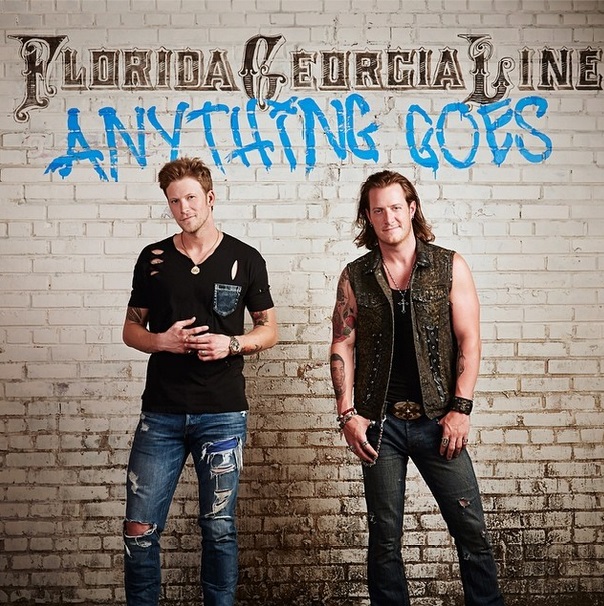
The new single by Florida Georgia Line does a great job of painting a picture for the listener.  There’s so much to see in this lyric!  Great job by songwriters Ross Copperman, Matt Jenkins, and Rodney Clawson.  Let’s take a look into this hit lyric.  I’m going to put the imagery in bold blue.

“Confession”

Rusty barbed wire lines these fields
Gravel dust behind the wheels
Drifting like my mind into the rearview
Jet trails cutting across the sky
I’m rolling through the open wide
Searching for a song to drink beer to
And trying to find a place to disappear to

CHORUS:

I light up the night and let it burn
Lean back and watch the sundown fade
Do what I do when life’s a little sideways
I take a sip and say a prayer
Wait for a shooting star and stare
Off at the headlights on the highway
That guy in the windshield looking back looks just like me
But there’s a crack in the reflection
This is just a moonlight soaked, ring of smoke
Right hand on a cold one confession

Embers in the ashtray glow
like memories that won’t let go
I’m out here trying to get ’em untangled
In the darkness on the edge of town
A little lost, a little found
Waiting on a call from an angel

REPEAT CHORUS TWICE

That’s a ton of images!  I really puts the listener into the scene.  Right away, the listener knows where the song is taking place.  We don’t have to drift around without an anchor.  We immediately see fields lined with barbed wire.  I’m watching the movie.

The writers also do a nice job of showing the singer’s emotional state.  Notice how they compare “memories that won’t let go” to embers glowing in the ashtray.  And how they put an image to how he feels broken by putting a crack in his windshield reflection.  Great stuff.

SHOWING is so much more interesting than just TELLING that he feels broken and has memories he can’t forget.  Show me, don’t tell me.

If you want your songs to stand out, put killer imagery in your lyrics.

Since strong imagery is such an important part of professional-level songwriting, I’ve put together a course on imagery. It’s called, “Use Imagery To Supercharge Your Songwriting (Like The Pros Do)” and it’s available now!

I’ve also created two LIVE, ONLINE workshops for “Use Imagery To Supercharge Your Songwriting (Like The Pros Do).”  Each workshop includes ALL the regular course materials- and they are now available for less than the price of the regular course!

Time is about to run out, so don’t delay. The workshops are on February 16 and 18, and a ticket comes with ALL the materials for the full course:

*2 hours of video teaching

*1 hour of audio (great for listening on-the-go)

*50-page ebook

*course workbook

And, of course, you get an hour of additional coaching on the live, online workshop.  I’ll cover materials not included in the regular course, and we’ll do plenty of Q&A.  It’s your chance to ask me your songwriting questions.

As long as you have an internet connection, you can join us! (We’ll be using the Fuze online platform, which is free.)

By the end of the course, you’ll have the basic skills to:

  1. Effectively use both literal and figurative imagery.
  2. Make your story come to life using imagery.
  3. Prove your character’s personality using imagery.
  4. Make your listener connect to your character’s emotions using imagery.
  5. Hook your listener in the song’s first few lines using imagery.
  6. And to begin more songs (more easily) using imagery exercises as the start of your songwriting process.

To find out more, just…

CLICK HERE for the FEB. 16 ONLINE WORKSHOP and COURSE.

CLICK HERE for the FEB. 18 ONLINE WORKSHOP and COURSE.

If you can’t make either workshop, but you’re ready to “Use Imagery To Supercharge Your Songwriting (Like The Pros Do)” CLICK HERE or on the image below.

God Bless,

Brent

Brent Baxter is a hit songwriter with cuts by Alan Jackson, Randy Travis, Lady Antebellum, Joe Nichols, Gord Bamford, Ruthie Collins, Ray Stevens, and more. He’s written a top 5 hit in the US and a #1 in Canada… so far.

imagery_square_copy

 Man vs Row

The Advantages of Cowriting

Man vs Row

Nashville is a cowriting town.

It seems that everyone that moves or spends time here gets sucked into it eventually.  But maybe you’re unsure if it’s something you want to try.  Maybe you’ve always written alone and you’re worried about the unknown.  Maybe you think another writer might pull your song in the wrong direction.  Maybe you don’t see the value in it.

If that’s the case, consider these advantages of cowriting:

1. More relationships.

The writing room can be a very lonely place.  Some of your cowriters will become close friends, and that’s awesome.  For me, one of my favorite parts of songwriting is getting to hang out for hours with people I admire and enjoy.  Each of your cowriters also has his or her own network.  That means they can help you mean more publishers, artists, other cowriters, etc.

0 A Story Of Relationships

2. More pitch / promotional power.

If you write a song alone, it’s up to you- and only you– to get it into the right hands (a publisher, a producer, an artist, etc.).  However, if you add a cowriter or two, now you have more people to play the song out live at songwriter nights or pitch it to publishers or artists.  It multiplies the chance that your song will be heard by the right people.

Rise

3. More ideas.

When you write alone, you have to come up with every single melodic and lyric idea yourself.  If YOU don’t think of it, it doesn’t end up in your song.  However, when you cowrite, you and your cowriter help each other overcome those creative roadblocks. “Two heads are better than one.”

4. Less creative ruts.

When you only write alone, it’s harder to stay out of creative ruts and it’s harder to pull yourself out of them.  Maybe you find yourself going back to the same tempos, moods, chord progressions or stories time after time after time.  However, it’s hard to stay in a rut if you’re writing with a bluegrass female on Monday and a pop-country guy on Wednesday.

5. Less excuses, more productivity.

It’s pretty easy to break writing appointments with yourself.  Nobody’s going to call wondering where you are, and you’ll probably get bonus points with your spouse if you did the laundry or mowed the yard instead.  But if you know someone expects you to be online or in the writing room at a certain time to write, you’re a lot less likely to bail. Likewise, it’s pretty easy to walk away from your guitar or notebook when you hit a creative roadblock in a song.  But it’s a lot harder to just walk into the other room and turn on the TV when you have a cowriter sitting across from you.  That would be just plain awkward.

6. Faster learning curve.

Cowriting allows you to learn from your fellow songwriters.  You get a front row seat to observe how they think, how they overcome obstacles, etc.  You may pick up a cool alternate tuning or a way of constructing a lyric that you would’ve only discovered on your own years later.  Plus, a good cowriter will challenge you to dig deeper and write better songs.  I know that’s definitely been true for me.

This is not to say that cowriting is always the best thing in every circumstance.  But it sure has helped a lot of writers (like me) get more successful more quickly.  What about you?  What other advantages of cowriting would you add to this list?  Leave a comment below- I’d love to hear from you!

Oh, and here’s one more advantage…

7. Complimentary strengths.

Few songwriters are equally strong at both lyrics and melody.  Even fewer are equally strong AND GREAT at both.  So, if you’re like most of us, your songs can benefit from finding a cowriter who is strong where you aren’t.  And this doesn’t mean just “strong at lyric” or “strong at melody” or “strong at producing.”  It could even be more specific things like “great at idea development,” “brings in killer hooks” or “writes awesome images.”

Team Sport

You want to find cowriters who have valuable strengths.  And YOU become a more valuable, in-demand songwriter as you develop strengths in different areas.  One area which has helped me attract and grow some valuable cowriting relationships has been my ability to write with strong imagery.

Writing with great imagery has helped my songwriting career and helped get my songs cut.

Imagery in songs like “Monday Morning Church” (a top-5 hit for Alan Jackson), “Last Night Last” (recorded by Lady Antebellum), “Crickets” (the title-track to Joe Nichols’ current album), and “When Your Lips Are So Close” (Canadian #1 hit and Single Of The Year for Gord Bamford) helped them get recorded and released.  I’m living proof that it’s a valuable skill.

And since strong imagery is such an important part of professional-level songwriting, I’ve put together a course on imagery. It’s called, “Use Imagery To Supercharge Your Songwriting (Like The Pros Do)” and it’s available now. 


By the end of the course, you’ll have the basic skills to:

  1. Effectively use both literal and figurative imagery.
  2. Make your story come to life using imagery.
  3. Prove your character’s personality using imagery.
  4. Make your listener connect to your character’s emotions using imagery.
  5. Hook your listener in the song’s first few lines using imagery.
  6. And to begin more songs (more easily) using imagery exercises as the start of your songwriting process.

If you want to join a LIVE workshop or learn more about how to “Use Imagery To Supercharge Your Songwriting (Like The Pros Do)” CLICK HERE or on the image below.

God Bless,

Brent

Brent Baxter is a hit songwriter with cuts by Alan Jackson, Randy Travis, Lady Antebellum, Joe Nichols, Gord Bamford, Ruthie Collins, Ray Stevens, and more. He’s written a top 5 hit in the US and a #1 in Canada… so far.

imagery_square_copy

 cropped-man-vs-row.jpg

Wordplay Thursday #127

Wordplay Thursday

Welcome to Wordplay Thursday!

Today, I’m going to give you a topic, and the wordplay is to show that topic with ONLY sensory images (sight, smell, taste, touch, sound). The point is to have fun with the old Nashville advice that says, “Show me, don’t tell me.” You can just pick one sense, or you can challenge yourself by playing one image from each of the 5 senses.

This week, let’s paint a picture about…

“The Thaw”

Here’s an example to get you started:

“The brown grass is muddy beneath my boots. An old man with silver hair shovels ice and snow away from his barber shop door. A snowman is leaning over, unable to reach his fallen limb. Patches of snow find refuge in shadows.”

Now it’s your turn. Show me, don’t tell me!

Oh, and please keep your posts below an R-rating. It’s a family show, after all…

And thanks to Tomas Giraitis,Kerry Meacham, Ken Matthiessen, Max Maxwell, Jerry Childers, Nick S., Kate,  Linda Keser, Matt Martoccio and everyone else for your great additions to Wordplay Thursday #126 (read it here)! Great job!

Since strong imagery is such an important part of professional-level songwriting, I’ve put together a course on imagery. It’s called, “Use Imagery To Supercharge Your Songwriting (Like The Pros Do)” and it’s available now. And this week, you can get my new course at a discounted price!

The live ONLINE workshops for “Use Imagery To Supercharge Your Songwriting (Like The Pros Do)” are now available for only $60.

That’s 33% off!

This is for a limited time, so don’t delay. The workshops are on February 16 and 18, and a ticket comes with ALL the materials for the full course:

*2 hours of video teaching

*1 hour of audio (great for listening on-the-go)

*50-page ebook

*course workbook

And, of course, you get an hour of additional coaching on the live, online workshop. As long as you have an internet connection, you can join us! (We’ll be using the Fuze online platform, which is free.)

By the end of the course, you’ll have the basic skills to:

  1. Effectively use both literal and figurative imagery.
  2. Make your story come to life using imagery.
  3. Prove your character’s personality using imagery.
  4. Make your listener connect to your character’s emotions using imagery.
  5. Hook your listener in the song’s first few lines using imagery.
  6. And to begin more songs (more easily) using imagery exercises as the start of your songwriting process.

To find out more, just…

CLICK HERE FOR THE FEB. 16 ONLINE WORKSHOP AND COURSE.

CLICK HERE FOR THE FEB. 18 ONLINE WORKSHOP AND COURSE.

If you can’t make either workshop, but you’re ready to “Use Imagery To Supercharge Your Songwriting (Like The Pros Do)” CLICK HERE or on the image below.

God Bless,

Brent

Brent Baxter is a hit songwriter with cuts by Alan Jackson, Randy Travis, Lady Antebellum, Joe Nichols, Gord Bamford, Ruthie Collins, Ray Stevens, and more. He’s written a top 5 hit in the US and a #1 in Canada… so far.

imagery_square_copy

 Wordplay Thursday

Gather Images By Writing The Video For Your Song

Man vs Row

Sometimes, as writers, we have the tendency to leave too much information in our heads and off of the page.

Maybe we know the story too well- maybe because we’ve lived it. Either way, our lyrics can sometimes just comment upon the story without actually giving us the story.

You might say, “Last night, you made me cry,” without telling us that he made you cry BECAUSE he “looked at me with cold blue eyes like I was some stranger he was telling goodbye.” It’s up in your head- you see the picture when you sing that line. But the listeners won’t see that. They can’t. They’re not in your head.

You want to build the habit of showing us the cause of the emotions, not just telling us about the emotions.

Show The Cause

One way to help in this process is to “write the video.” This is not actual storyboarding. It’s just stream-of-consciousness (or more thoughtfully) writing down what you see in your mind’s eye when you’re thinking about the story in your song. Memories or make believe, it doesn’t matter. Just capture the sights, sounds, tastes, touch and smells of your story.

This process is good for a few reasons:

1. It gives you a stack of images to draw from in your lyrics.

You can now pick out the coolest, most true images for your song.  You’re not stuck just using what you can think of in the moment.  Instead of “well, that’s the best I could think of at the time,” you get to say “that’s the best I could think of. Period.”

2. It helps you really crystalize your thoughts.

Instead of vague notions you’re trying to capture in your song, you’ve already sketched out your story. Now, instead of trying to come up with the next rhyme, you’re more likely to think about what the thought needs to be. And a cool thought is much more important than just a cool rhyme.

3. It helps you reach past cliche’ images.

It might be easy to just write about her “feet on the dashboard” because that’s what country songs say (and you’re just focused on finding a line that sings well). However, if you spend more time on the story without being constrained by “next line syndrome,” you’re more likely to say, “Well, no. Her feet weren’t on the dash. One leg was curled up under the other.” That’s way more original and more believable.

So, remember. Focus on giving the listener the cause of your emotions, not just your emotions. Write the video to your song, and you’re more likely to see the video OF your song someday.

Since strong imagery is such an important part of professional-level songwriting, I’ve put together a course on imagery. It’s called, “Use Imagery To Supercharge Your Songwriting (Like The Pros Do)” and it’s available now. 


By the end of the course, you’ll have the basic skills to:

  1. Effectively use both literal and figurative imagery.
  2. Make your story come to life using imagery.
  3. Prove your character’s personality using imagery.
  4. Make your listener connect to your character’s emotions using imagery.
  5. Hook your listener in the song’s first few lines using imagery.
  6. And to begin more songs (more easily) using imagery exercises as the start of your songwriting process.

If you’re ready to “Use Imagery To Supercharge Your Songwriting (Like The Pros Do)” CLICK HERE or on the image below.

God Bless,

Brent

Brent Baxter is a hit songwriter with cuts by Alan Jackson, Randy Travis, Lady Antebellum, Joe Nichols, Gord Bamford, Ruthie Collins, Ray Stevens, and more. He’s written a top 5 hit in the US and a #1 in Canada… so far.

imagery_square_copy

Anthony Orio’s Advice For Indie Artists

Anthony Orio Home

Today, I want to share some valuable advice for indie artists and indie singer/songwriters. Yeah, I know. I’m not an artist or even a decent singer. Not to worry, I’ve called in an expert.

Anthony Orio is a good buddy of mine. More importantly for today’s purposes, Anthony and his band, The Goodfellers, are the reigning FOUR-TIME winners of Taste of Nashville’s “Best Local Band” as voted upon by the readers of The Tennessean newspaper.

Apart from winning a four-peat as Nashville’s best local band, they are far from a local band. Anthony and the boys play over 200 dates a year- ranging from Toronto, Canada, to Spring Break in Panama City Beach, Florida. Anthony’s also had a few singles featured on Sirius XM’s “The Highway” (“Those Nights These Days” and “Walkin’ On Whiskey”).

His fans are loyal, and his live show is great. He’s even had Goodfellers members turn down gigs with major label artists to stick with him.

Obviously, Anthony’s doing something right.

I asked him to give some advice about how to become a successful indie artist, and here’s what he had to say:

Orio Show

“1) Be prepared to wear all the hats- writer, artist, producer, booking agent, publicist, and the list goes on and on-especially in the beginning.

2) You’re gonna have to give up some sleep. Before I was able to tour and make music full time, I was holding down a day job, a part time job, writing and playing at night, and then waking up after 2 hours sleep, and doing it all over again.

3) And the number 1 and MOST important thing to remember, that no matter how much people “in the industry” want to talk about how much the music business has changed or continues to change, it’s all about one thing- the fans. Cherish the ones you make. Give them 150% every night you step on stage. Give them some of your time when you step off that stage.  Treat them each as if they were precious pieces of gold, because they are the ones that allow you to do what you do.”

Orio Paper

If you get a chance to see one of Anthony’s live shows, I highly recommend it. It’s killer. You can also find him online at www.anthonyorio.com.

What about you?  Are you an indie singer or singer/songwriter?  What advice do YOU have for your fellow artists?  What mistakes have you seen artists make? Leave a comment- I’d love to hear from you!

Anthony’s a professional artist, and he thinks like one.  And if YOU want to become a pro at songwriting, you need to think like a pro, too.  In my FREE e-book, “THINK LIKE A PRO SONGWRITER,” I not only reveal several of the mindsets which separate the pro songwriter from the amateur, but also…

  1. How to get on a music publisher’s radar
  2. How the pros know who is looking for songs
  3. Six simple ways to make your songs more commercial
  4. And more!

To get your FREE, INSTANT download of “THINK LIKE A PRO SONGWRITER,” just click on the image below, or CLICK HERE!

think like a pro songwriter 3D

God Bless and Enjoy the Journey,

Brent

Brent Baxter is a hit songwriter with cuts by Alan Jackson, Randy Travis, Lady Antebellum, Joe Nichols, Gord Bamford, Ruthie Collins, Ray Stevens, and more. He’s written a top 5 hit in the US and a #1 in Canada… so far.

Man vs Row